Yes, the Monster Under the Bed Is Real...to Their Brain
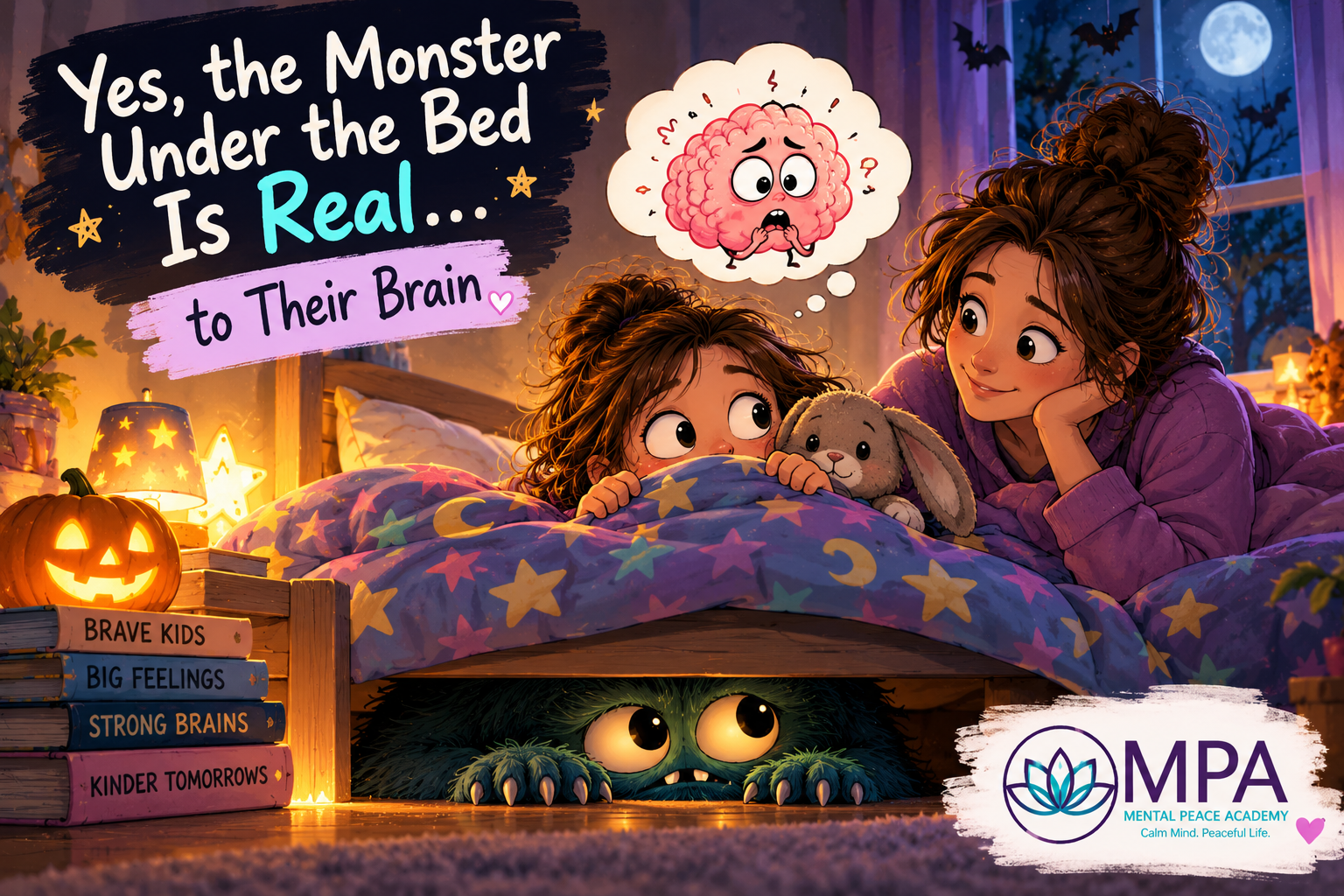
The monster may not be real. The fear is. Helping children understand their brain’s alarm system can teach them something even more important: “I can feel scared and still handle this.”
Okay, I know it's technically not October yet.
But I'm one of those people.
You know—the people who start thinking about Halloween at the end of August while everyone else is still trying to find their sunscreen.
I love Halloween. The decorations, the costumes, the scary movies, the ridiculous amount of candy. All of it.
So, in honor of my favorite season, Mental Peace Academy is spending October talking about fear—and we're starting with the littlest brains.
Because when a four-year-old tells you there's a monster under the bed, our adult instinct is usually:
"There's no monster. Go back to sleep."
Case closed.
Except...not really.
The monster may not be real.
The fear is.
Young children commonly develop fears of things like darkness, separation, animals, storms, unfamiliar people, and yes, imaginary creatures. Their brains are still learning how to distinguish possible from probable—and their imaginations are spectacularly good at filling in the blanks.
Unfortunately, saying "There's nothing to be afraid of" doesn't magically turn off the alarm system.
Think about an adult who's terrified of flying. You can explain turbulence, aerodynamics, safety statistics and the fact that they're more likely to get hurt driving to the airport.
Their nervous system may respond:
"Fascinating. We're still going to die."
Kids' brains aren't that different.
But here's where it gets tricky.
We don't want to dismiss fear, and we don't want to accidentally teach children that fear means danger.
If we eliminate every scary thing, check under the bed 47 times, let them avoid every dog, or repeatedly reassure them that absolutely nothing bad will ever happen, their brain can start learning:
"Good thing someone saved me. I couldn't have handled that."
Instead, we want the message to be:
"I believe you that this feels scary—and I believe you can handle feeling scared."
That's a very different lesson.
The goal isn't to raise children who never feel afraid.
Fear is useful. It's part of the system that keeps us from petting bears, wandering into traffic, and making several other decisions that tend to shorten one's life expectancy.
The goal is helping children learn the difference between:
"My brain is sounding an alarm"
and
"I am actually in danger."
Sometimes there's a fire.
Sometimes the smoke detector is just really enthusiastic about the toast.
And learning that difference?
That's how little brains start becoming brave ones.
Not because the fear disappeared.
Because they discovered they could handle it.