Friendships Change—And No One Warns You (Yes, It’s a Kind of Grief)
There’s something I see over and over again in my work.
It comes up with people in their 20s and early 30s…
and almost no one talks about it out loud.
👉 Friendships change.
Not because anyone did anything wrong.
Not because there was a big falling out.
But because… life happened.
The friends you saw every day in:
high school
college
early adulthood
Start to shift.
People move.
People get married.
People have children.
Schedules change. Priorities change. Energy changes.
And suddenly…
The group chat is quieter.
The invitations are fewer.
The connection feels… different.
And if you’re in a different life stage than your friends?
That feeling can get even heavier.
Maybe you’re:
not married yet
don’t have kids
or just on a different timeline
And you start to notice:
👉 You’re not included in the same way.
👉 You’re not thought of in the same way.
And that hurts.
Let’s name this for what it is
This is grief.
Not dramatic, headline-making grief.
But quiet, subtle, often unspoken grief.
The grief of:
what used to be
what you thought would stay the same
the version of friendship you expected to continue
And because nothing “bad” happened…
People often feel like they shouldn’t be upset.
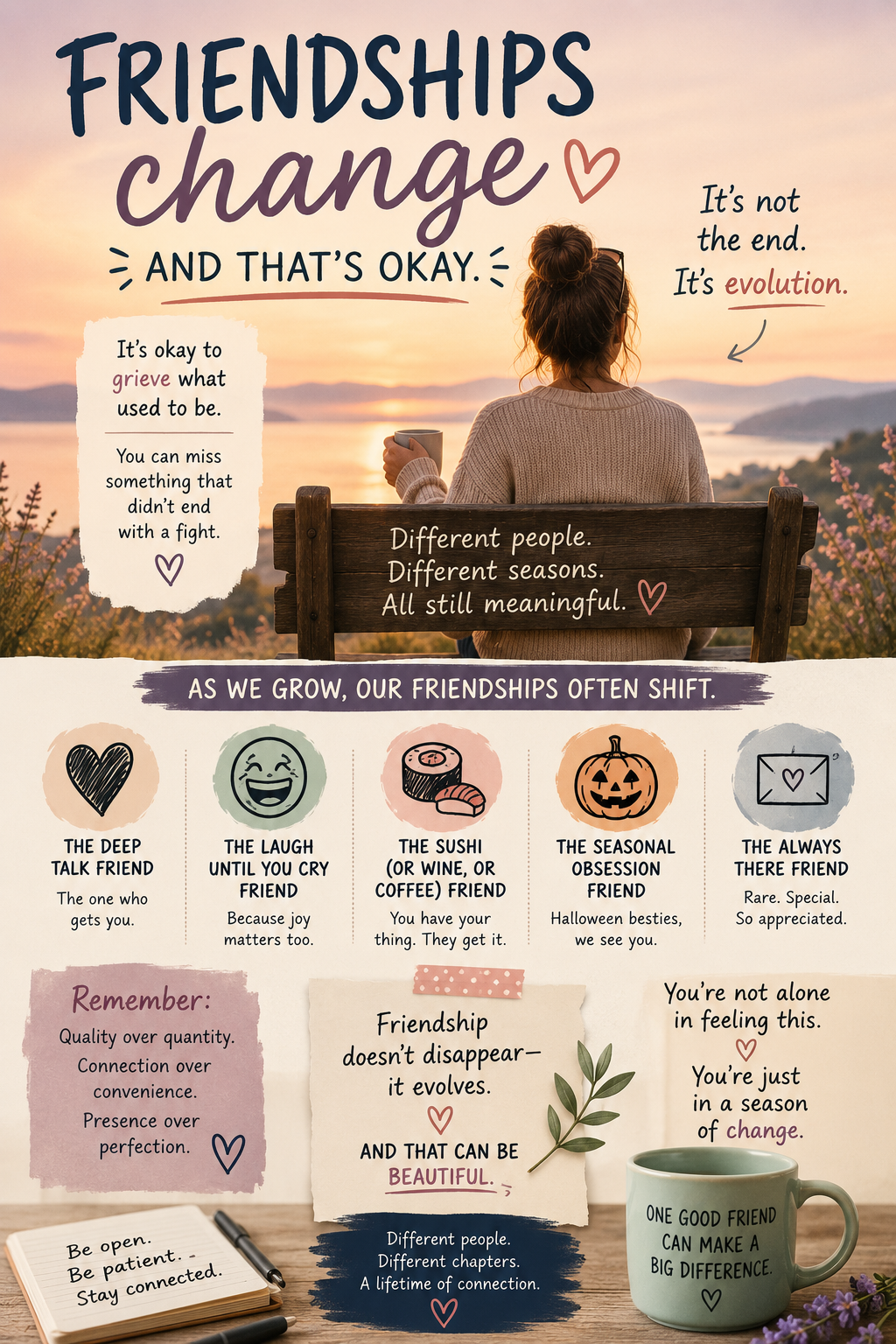
But you can miss something that didn’t end with a fight.
👉 You can grieve something that simply changed.
Here’s the part no one really prepares you for
As we get older, friendship often becomes less about one person being everything…
…and more about different people meeting different parts of your life.
You might have:
the friend who holds your deepest thoughts
the friend you laugh with until you cry
the friend who shares your oddly specific love of sushi
the one who matches your Halloween enthusiasm at a level that might concern others
(You know who you are 🎃)
And that’s not a downgrade.
It’s a shift.
Research actually supports this.
Social networks tend to:
shrink in size over time
but increase in depth and meaning (Socioemotional Selectivity Theory)
We become more intentional.
More selective.
More aware of what we need.
But that doesn’t mean it doesn’t hurt along the way.
Another hard truth
There may not always be one “best friend” who meets every need.
And that realization can feel… disappointing.
But it can also be freeing.
Because instead of expecting one person to be everything…
You start to build a network of connection.
And you begin to see:
👉 Different friendships serve different purposes
👉 And all of them can still be meaningful
So what do we do with this?
First:
👉 Normalize it.
You’re not doing friendship wrong.
You’re evolving.
Second:
👉 Allow the grief.
You’re allowed to miss:
how things used to feel
how easy it once was
how connected you once were
Third:
👉 Stay open.
New friendships often look different:
less frequent
more intentional
sometimes built later in life
And yes…
It can feel a little like dating.
(Small talk, scheduling, wondering if they like you… we’re all doing great 😄)
The bottom line
Friendships don’t disappear.
👉 They change.
And that change can hold both:
loss
and growth
You’re not alone in feeling this.
Not even a little.
And if you’ve been quietly wondering:
“Why does this feel so hard?”
Now you know.