When Empathy Goes Too Far
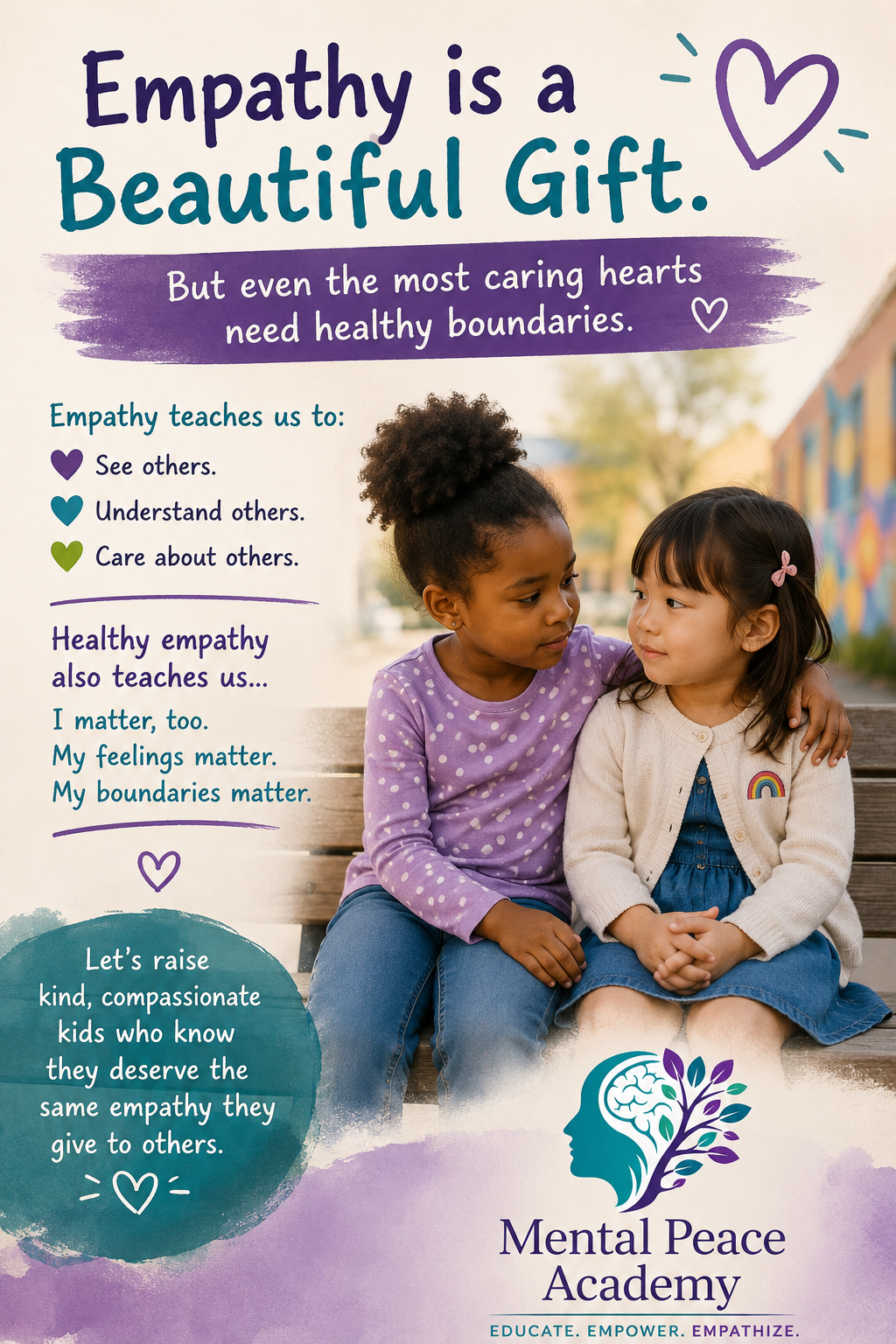
Empathy is a beautiful gift—but children also need healthy boundaries. Teaching kids to care for others while valuing themselves helps build emotionally healthy relationships for life.
Have you ever had one of those "Oh, crap..." moments where everyone else in the room is celebrating and you're the only one thinking something completely different?
I had one when my granddaughter was three years old.
She was undergoing a psychological evaluation, and one of the findings was that she scored around the 89th percentile for empathy.
Everyone smiled.
"What a wonderful gift."
"She's so caring."
"That's amazing."
As a grandmother, I smiled too.
As a therapist, my internal reaction was:
"Oh, crap. We need to make sure she learns boundaries."
Not because empathy is bad. The world could certainly use more kindness.
The reason I had that reaction is because so many of the people I work with aren't struggling because they lack empathy. They're struggling because they have too much of it.
They're the people who understand everyone's feelings, make excuses for everyone's behavior, and spend enormous amounts of energy making sure everyone else is comfortable.
Meanwhile, they're exhausted.
They feel guilty for saying no.
They worry about disappointing people.
They struggle to believe their needs matter as much as everyone else's.
One of the most important things we can teach empathic children is that understanding someone else's feelings does not make them responsible for managing those feelings.
You can be kind and still say no.
You can care about someone and still choose something different.
You can be empathic and still have boundaries.
Because the goal isn't raising children who always put everyone else first.
The goal is raising children who understand that other people matter...
and so do they.